
Why French Country Bathroom Vanities Are Taking the Global Home Design Market by Storm

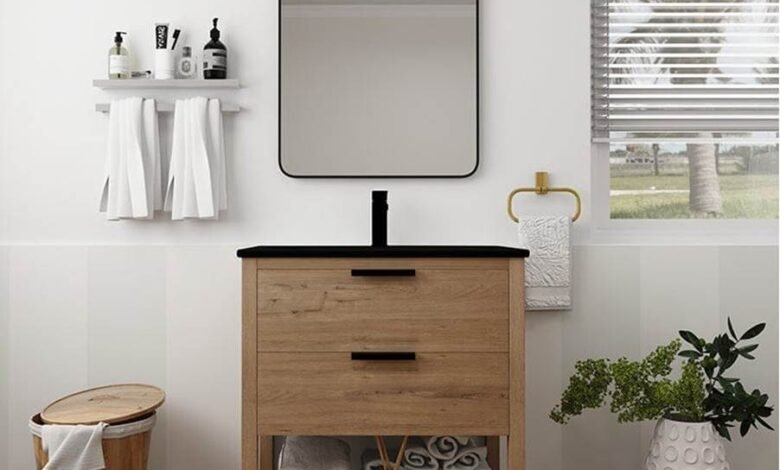
Open globally popular home design platforms like Houzz or Pinterest, and you’ll notice a clear trend: French country bathroom vanities are going viral, with an average monthly search growth of 47% (source: 2025 Global Bathroom Style Report). From Californian villa bathrooms to Tokyo apartments, and even old-home renovations in China’s major cities, these vanities — with their creamy tones, vintage charm, and natural textures — are breaking the monotony of “identical bathrooms.”
Unlike the extreme restraint of modern minimalism or the starkness of industrial style, French country vanities combine romance and practicality, appealing to consumers’ desire for a healing bathroom experience. Today, we’ll break down the “secret recipe” of French country bathroom vanities from four dimensions: style essence, popularity reasons, global examples, and styling tips.
Understanding the Style: The “Soul Design” of French Country Vanities Lies in These Details
To understand their popularity, you must first recognize the unique DNA of French country vanities. They are not just “wood + white” — through subtle design details, they convey a lifestyle that is laid-back, elegant, and close to nature, distinctly different from other country styles like American or English country.
1. Materials: Favoring Warm Wood + Ceramic, Rejecting Cold Industrial Feel
The essence of French country style is natural texture, reflected in material choices:
Cabinet: Solid wood is standard, often in ash, oak, or cherry, keeping natural wood grain visible. Main finishes include:
Distressed white paint — lightly worn edges to create a sense of history
Light walnut tone — preserves natural wood color, paired with matching countertops, perfect for a natural aesthetic
Cream yellow paint — soft and warm, more inviting than pure white, popular in recent years
Countertop: Ceramic is the ideal match. Almost all French country vanities feature ceramic sinks (undermount or integrated). The smooth ceramic glaze contrasts with the wood, ensuring practical cleanliness while enhancing French romantic charm. High-end models may use marble countertops (like Carrara or Jazz White) with soft patterns to avoid clashing with the rustic atmosphere.
2. Shape: Curves and Carvings “Just Right” — Neither Overdone nor Minimalist
French country style avoids excessive decoration and extreme minimalism, instead showing refinement in details:
Cabinet lines: Curved designs dominate; rounded edges on doors and corners prevent harshness. Examples: arched cabinet doors, curved side panels, or even pumpkin-shaped cabinets for a playful touch in small bathrooms.
Carvings: Subtle and restrained. Unlike ornate European styles, French country vanities often feature simple lines, like a single arched carving on a door, a small scroll at the base, or minimal carvings on drawer handles. Delicate but lightweight.
Sizes: Flexible for space. Options range from 60cm single-sink units (apartments) to 120cm double-sink units (villas or master bathrooms). Storage is optimized via drawers + open shelves; baskets can hold towels and toiletries, reinforcing the rustic feel.
3. Hardware: Vintage Metals “The Finishing Touch”
Hardware defines whether the style “hits the mark”:
Faucets: Prefer antique brass or matte black, often with high-arc necks (gooseneck) or cross handles. Avoid overly modern pull-out faucets. Some use double-hole faucets to strengthen the vintage vibe.
Handles: Options include round knobs, metal rings, or wood-metal combos. Brass knobs often have a distressed finish for aged charm. Metal rings suit a minimalist French country look, pairing well with white cabinets.
Accessories: Wicker and ceramic are essential. Mirror cabinets with wooden frames, matching wicker storage boxes, ceramic soap dishes, or glass vases with dried flowers reinforce the natural feel.
See also: What Are Display Fonts and When Should You Use Them?
Global Popularity: Why French Country Vanities “Break the Bubble” — 3 Core Reasons
From Europe and America to Asia, families are choosing French country vanities because they perfectly meet global home design core needs.
1. Healing Effect: Creating a “Bathroom Sanctuary” Against Fast-Paced Life
Post-pandemic, the demand for home healing spaces has surged. French country style delivers emotional value:
Visual comfort: Warm wood, soft colors (cream, light walnut, pale yellow), and natural textures reduce the “coldness” of bathrooms, turning them into relaxation corners. A New York user shared:
“Brushing my teeth every morning at a French country vanity feels like a countryside vacation — it brightens my mood.”
Tactile comfort: Smooth wood, fine ceramic surfaces, even the rough texture of wicker baskets convey natural closeness, far more relaxing than cold stone or metal, especially for urban dwellers under stress.
2. Compatibility: Works With Any Space or Style
French country vanities are highly versatile:
Small spaces: 60–80cm units often wall-mounted or open-bottom, visually lighter for compact bathrooms. Cream or light wood tones make a 4㎡ bathroom feel larger.
Style mixing: Even in modern bathrooms, a French country vanity can accentuate the space — e.g., gray walls + white tiles + cream vanity + antique brass faucet adds warmth without clashing. Japanese homes favor French country + Scandinavian mixes, adding plants for a natural feel.
Regional adaptation: Large U.S. bathrooms prefer double sinks; small Japanese bathrooms prefer single sinks; Chinese old-home renovations need custom sizes. Adjustments in dimensions and details cater to these differences.
3. Practicality: Beauty Meets Function, Not “Just Decoration”
Contrary to the belief that stylish = impractical, French country vanities excel in:
Storage: Combination of drawers + cabinets + open shelves. Drawers for cosmetics, cabinets for cleaning supplies, shelves for towels. Large models may include a mirror cabinet.
Easy maintenance: Wood treated with waterproof coatings; ceramic tops resist stains; cleaning is simple.
Durability: Solid wood frames + multilayer panels, supporting 80kg per single sink; lifespan over 10 years, outperforming modern particleboard vanities.
Buying & Styling: 3 Steps to a “Safe” French Country Vanity
1. Selecting the Model: Avoid 3 Mistakes
Mistake 1: Blindly choosing oversized units — small bathrooms ≤6㎡: 60–80cm single sinks, wall-mounted or open-bottom; large bathrooms ≥8㎡: double sinks with ≥80cm spacing.
Mistake 2: Ignoring material quality — solid wood must be moisture-treated; ceramic top should have high-temperature microcrystalline glaze.
Mistake 3: Random hardware — faucets and handles must be vintage style, avoid overly modern pieces.
2. Styling: Walls to Soft Furnishings
Walls: Light tiles or paint (cream white, light gray, subtle textured cement paint). Vintage floral tiles only for vanity background.
Floors: Slip-resistant wood-look tiles or light gray tiles; light-colored to match cabinet, simple and easy to clean.
Soft furnishings: Wicker, ceramics, dried flowers; towels in beige or light gray; avoid bright colors that break harmony.
3. Pitfalls to Avoid: Details That Make or Break the Look
Mirror cabinet: Avoid metal frames, prefer wooden or frameless round mirrors.
Lighting: Warm yellow; wall sconces or ceiling globe lights.
Cleaning: Consider ease of maintenance; ceramic surfaces resist scratches but avoid sharp objects.
Conclusion
The global craze is not just about aesthetics. French country vanities convey a slow-life attitude. In fast-paced times, people crave a relaxing, healing corner at home. They are neither ostentatiously luxurious nor blindly trendy, but warm, practical, and elegant, letting users enjoy leisure and romance in everyday washing rituals.
If you’re tired of uniform modern bathrooms and want a cozy, stylish space, consider a French country vanity — it may not be the trendiest, but it is a long-term comfortable and beloved choice. A good home design is about matching your lifestyle, not chasing fleeting trends.
